
Search Florida Felony Records
Florida felony records document serious criminal cases across all 67 counties in the state. These public records include charges, court filings, case outcomes, and sentencing information maintained by the Florida Department of Law Enforcement and local Clerk of Court offices. You can access these records through online portals, in-person visits, or formal requests. The Sunshine Law ensures most felony case information remains open to the public unless sealed or expunged by court order.
Florida Felony Records Quick Facts
Florida Department of Law Enforcement Criminal History
The Florida Department of Law Enforcement serves as the central repository for Florida felony records and criminal history information. FDLE maintains statewide records covering all 67 counties. You can search these records through their online portal for instant results. The system charges $24 per search plus a $1 processing fee. Results display immediately after payment.
The FDLE Criminal History Search Portal allows name-based searches using full legal name, date of birth, and gender. Social Security numbers are optional but improve accuracy. The search includes felony charges and convictions, misdemeanor offenses, pending cases, and case outcomes including guilty verdicts, no contest pleas, withheld adjudications, and dismissed charges.
Records that are sealed or expunged do not appear in public searches. Juvenile records have restricted access under Florida law. Active investigations may also have limited disclosure until cases close.
For those seeking certified copies, FDLE offers mail requests processed within 5 to 7 business days. The same $24 fee applies. You may also request a personal review of your own criminal history record at no charge under Section 943.056, Florida Statutes. This helps ensure accuracy before applying for seal or expunge relief.
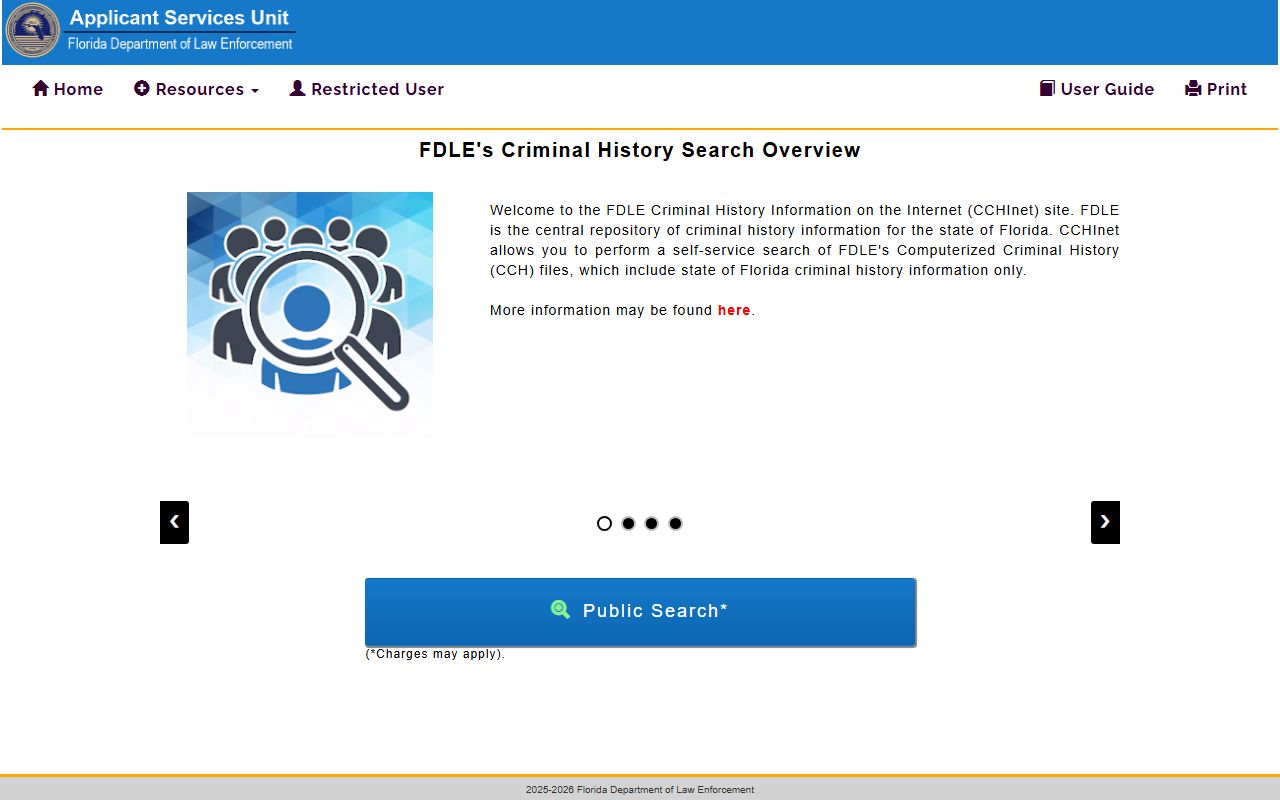
The FDLE homepage provides access to criminal history records, seal and expunge information, and public safety resources. Visit www.fdle.state.fl.us to explore all available services.
Note: The FDLE criminal history database represents the most comprehensive source for statewide felony records in Florida.
Sealing and Expunging Florida Felony Records
Florida law allows certain individuals to seal or expunge their criminal history records under specific circumstances. This process can help people move forward after completing their sentences. The FDLE Seal and Expunge Section handles Certificate of Eligibility requests. Processing typically takes 12 weeks from receipt of a completed application packet.
To begin, you must obtain a Certificate of Eligibility from FDLE before petitioning the court. The certificate costs $75 and remains valid for 12 months from the date stamped. Only first-time offenders with no prior seal or expunge orders qualify. Cases must have resulted in no adjudication of guilt. Certain disqualifying offenses including arson, aggravated assault, child abuse, drug trafficking, homicide, kidnapping, and sexual offenses cannot be sealed or expunged.
The FDLE Seal and Expunge Process page provides detailed instructions, required forms, and application status information. You can email questions to SEinfo@fdle.state.fl.us. Include a copy of your government-issued photo identification when requesting status updates.
Four types of relief exist under Florida law:
- Administrative Expungement for arrests made contrary to law or by mistake
- Court-Ordered Sealing or Expungement requiring Certificate of Eligibility
- Juvenile Diversion Expungement for completed diversion programs
- Automatic Sealing by operation of law for qualifying dispositions after October 1, 2019
When a record is expunged, criminal justice agencies must physically destroy or obliterate it. You may lawfully deny the arrest occurred, with exceptions for applications to law enforcement agencies, the Florida Bar, certain healthcare licensing boards, and guardian appointments.
County Clerk of Court Felony Records
Each of Florida's 67 counties maintains felony court records through the Clerk of the Circuit Court and Comptroller offices. These records include case filings, court documents, dockets, and dispositions. Most counties now offer online access to court records through public portals. You can search by name, case number, or date range depending on the county system.
The Comprehensive Case Information System offers a secured single-point search for statewide court case information. However, CCIS access is restricted to governmental agencies, law enforcement, judicial community members, and state agencies. The general public must use individual county clerk portals or the FDLE criminal history system.
Major counties like Miami-Dade, Broward, Palm Beach, Hillsborough, and Orange offer robust online case search systems. These portals typically include criminal case details, court dates, charges, and document images. Some counties charge fees for certified copies or advanced search features.
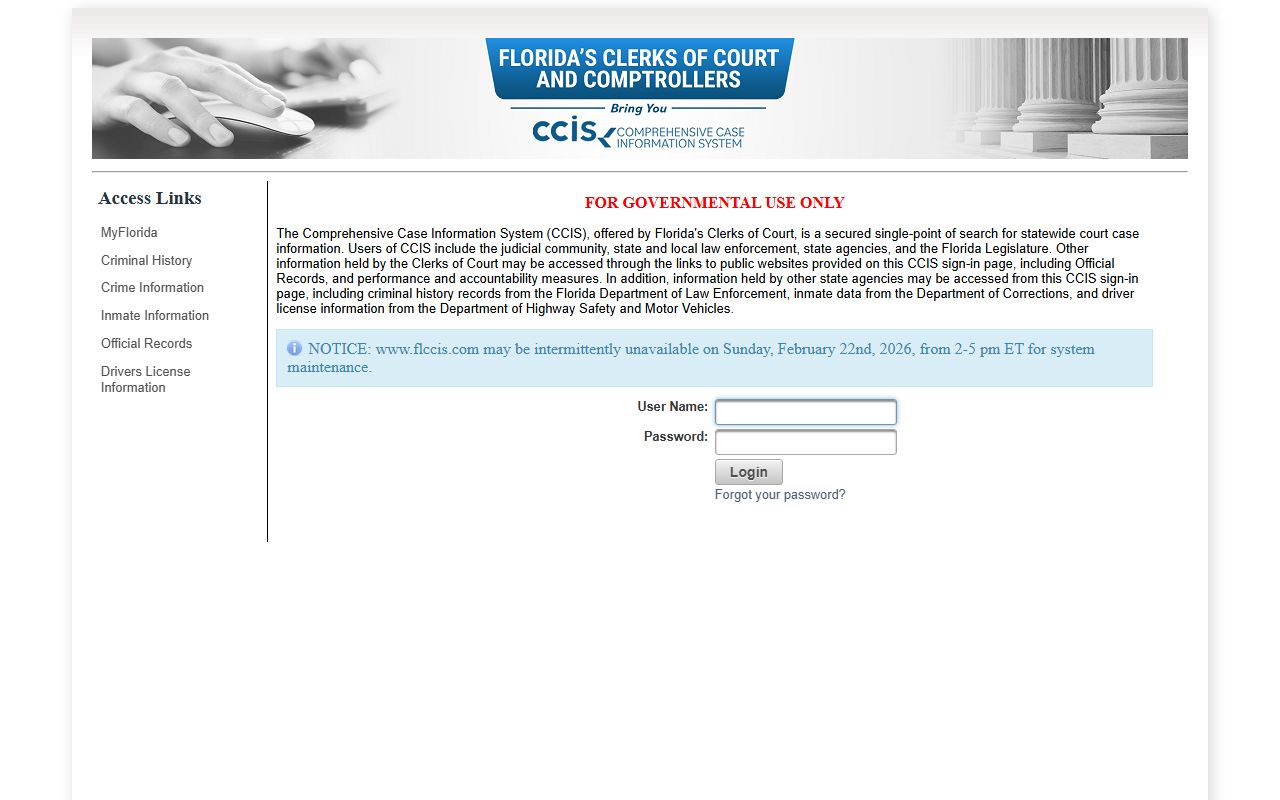
The Florida Court Clerks and Comptrollers website at flclerks.com provides links to all 67 county clerk offices. This resource helps you locate the correct clerk for any Florida county. You can find contact information, office hours, and available online services.
Note: Electronic court records may not represent the official record. Always consult the Clerk's office for certified copies needed for legal proceedings.
Florida Department of Corrections Offender Search
The Florida Department of Corrections maintains records for current and former inmates sentenced to Florida state prisons. Their Offender Search portal provides free public access to felony offender information. This database includes individuals currently incarcerated, under supervision, or listed as absconders.
Search results display inmate location, current status, identifying information, sentence details, and release dates when available. Most records include a mugshot photo. This system focuses on felony offenders who received state prison sentences rather than county jail time.
The DOC database serves as a valuable supplement to FDLE criminal history searches. While FDLE provides arrest and court outcome information, DOC records show actual incarceration periods and facility locations. Together these sources provide a complete picture of felony cases resulting in prison sentences.
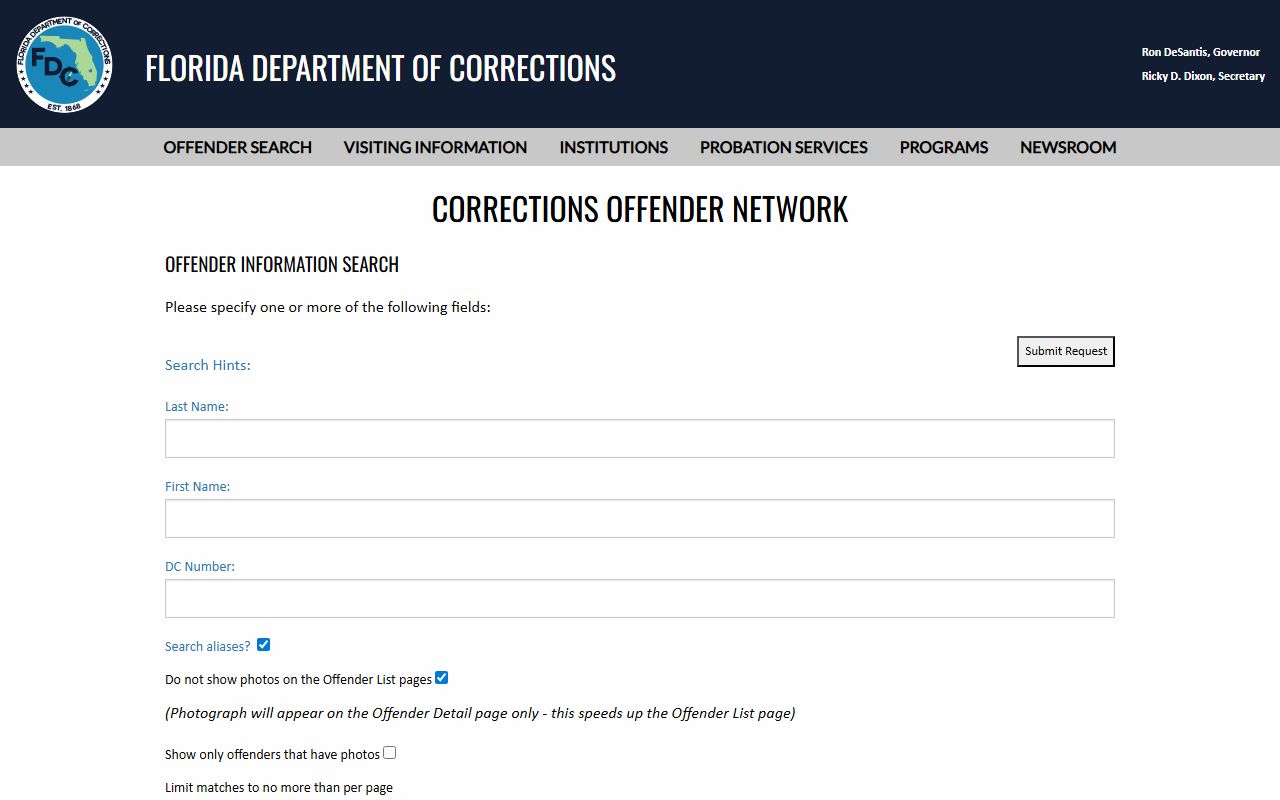
The Department of Corrections website also provides victim services, reentry resources, and facility information. Families and victims can use the inmate search to locate incarcerated individuals and learn about release dates.
Florida Public Records Law for Criminal Cases
Article I, Section 24(a) of the Florida Constitution establishes the right of access to public records. Chapter 119, Florida Statutes, known as the Sunshine Law, implements this constitutional right. The law states that all state, county, and municipal records are open for personal inspection and copying by any person.
This broad access applies to felony court records maintained by clerks of court. You do not need to state a purpose or present identification to view public records. Each agency must provide access promptly and respond to requests in good faith. Fees for copies are limited to 15 cents per one-sided page for standard sizes, plus $1 per certified copy.
Certain records remain exempt from public disclosure. These include active criminal intelligence information, active investigative information, and records sealed or expunged by court order. Juvenile records receive additional protections under Florida law. Law enforcement agencies may withhold information that would jeopardize ongoing investigations or endanger witnesses.
Section 943.053 specifically addresses public access to criminal history records. It confirms that Florida criminal history information is public unless sealed or expunged. FDLE may charge reasonable fees for providing this information to cover administrative costs.
Florida Official Records Search
The MyFloridaCounty Official Records system provides statewide access to recorded documents. While primarily used for property records, liens, and mortgages, this system also contains certain judgment records related to criminal cases. The search allows filtering by specific county, judicial circuit, region, or statewide.
Official Records are defined under Section 28.001, Florida Statutes, as instruments required or authorized to be recorded in one general series. These records serve as public notice of legal documents affecting property and financial interests. Some criminal restitution orders and judgment liens appear in Official Records.
Each county clerk maintains their own Official Records index with documents recorded from various dates. Most counties provide online access from the 1980s or 1990s forward. Older records may require in-person research at the clerk's office. Fees vary by county for certified copies and document searches.
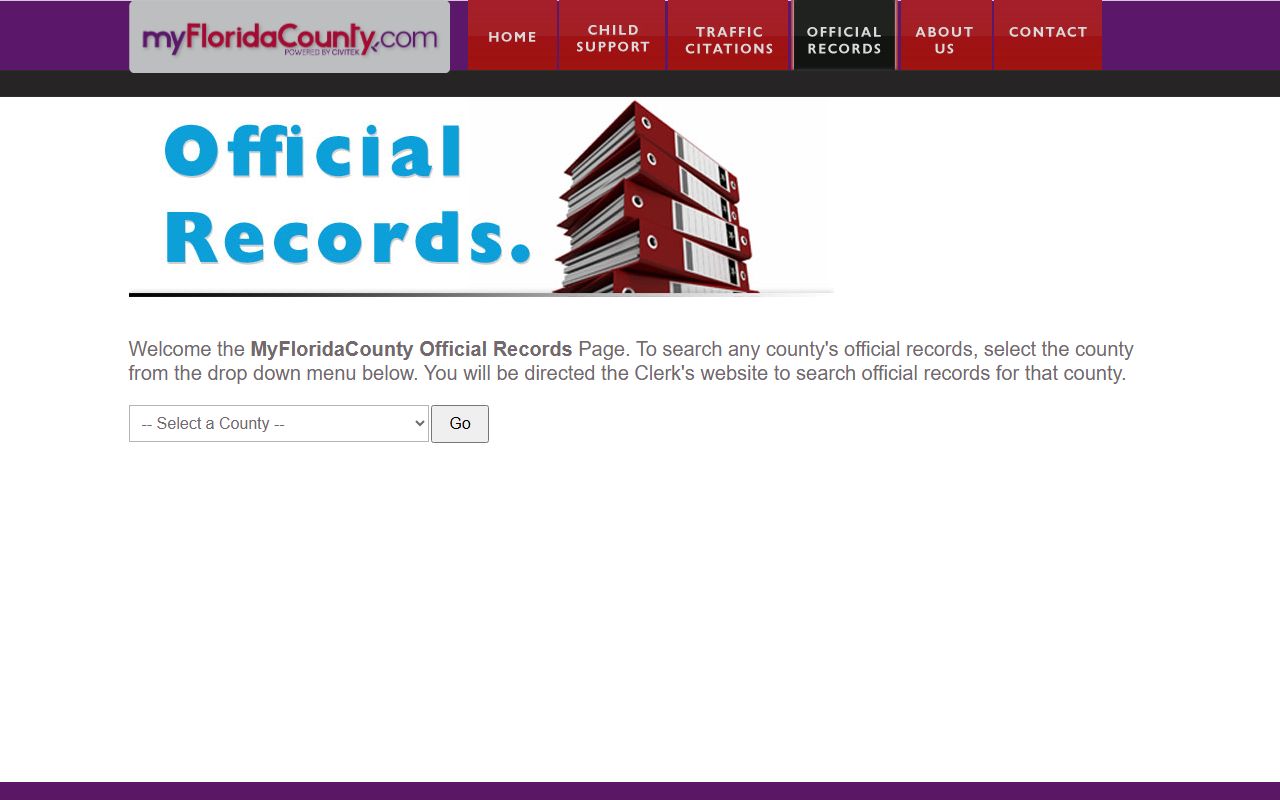
The Official Records search works best when combined with court case searches. Together these systems provide comprehensive information about felony cases and their financial impacts.
Browse Florida Felony Records by County
Each Florida county maintains felony court records through the Clerk of Court office. Select a county below to find local contact information, online search portals, and specific resources for that jurisdiction.
Felony Records in Major Florida Cities
Florida cities fall within county jurisdictions for court records. Select a city below to learn about accessing felony records in that area.